PACE blog – reflections on session one 'Working on the System' from Ann Carruthers
2026 Cohort - session one - Working on the system: place leadership to transform future outcomes
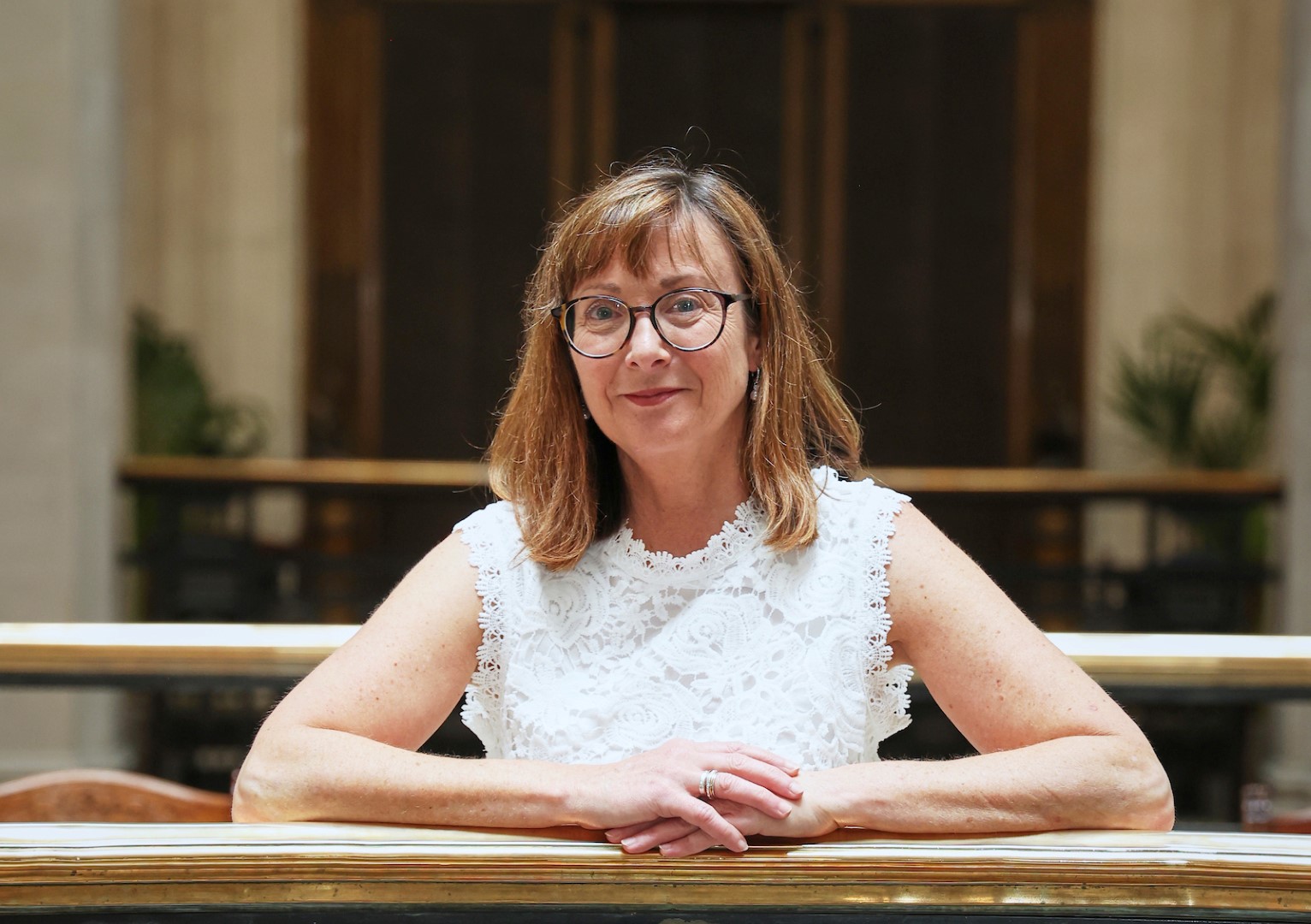
As the fourth year of ADEPT and Amey’s innovative Pioneering, Action-orientated, Creative and Entrepreneurial (PACE) programme gets underway, Ann Carruthers, ADEPT President (2024 to 2025) and Director of Growth, Environment and Transport at Leicestershire County Council, reflects on the opening session held at the Churchill War Rooms in London.
Against the backdrop of this historic setting, this year's cohort began exploring the theme “Working on the system: place leadership to transform future outcomes”, considering what it means to lead places through uncertainty, build trust and think beyond today's immediate pressures.
What stood out most from the first PACE session?
Holding the first session at the Churchill War Rooms felt particularly fitting. It is a place where people were making decisions in incredibly challenging circumstances but always with one eye on the future.
They were responding to immediate events while thinking strategically about what came next. For me, that feels very relevant to where we are as place leaders today.
We spend a lot of time dealing with immediate pressures, whether that means financial challenges, responding to severe weather events, changing political landscapes or growing demand for services. But if we only ever focus on the crisis in front of us, we never create the space to shape what comes next.
The venue encouraged us to lift our heads and think differently. That is exactly what PACE is designed to do. It creates the space to step outside the day job and consider the wider systems we are working within.
Why is this year's theme, "Working on the system: place leadership to transform future outcomes", so important?
One of the strongest messages from the day was that the context we are operating in has fundamentally changed. Business as usual is not the same as when many of us began our careers and the financial, political, social and technological landscapes that inform our work and our decisions are shifting and evolving more rapidly than ever before in our history.
This is particularly interesting when you consider the 140-year span of ADEPT, which we are celebrating this year, and the origins of the County Surveyors’ Society that the current organisation evolved from.
For years we have tended to think of major events as exceptions. We respond to a flood, a period of extreme heat or an economic shock, then try to return to ‘normal’ afterwards. Increasingly, those events are becoming normal.
Rather than constantly switching between emergency mode and business as usual mode, ideally we need to aim for organisations that are resilient enough to absorb those pressures as part of their everyday leadership and operations.
This approach will require us to think very differently. Instead of simply managing services, we need to understand the wider systems shaping our places and ask ourselves where we have influence, who we need to work with to secure better outcomes and how we build resilience for the long term.
What discussions challenged your current outlook the most?
In one word? Trust.
It came up time and time again throughout the day and it really resonated with me. We often talk about highways as assets, or property as assets, but we explored whether we should start thinking about trust in exactly the same way.
Trust is something that needs investment and maintenance, just like a bridge, or a road or a building. Without trust in who we are, what we do and how we do it, delivering positive outcomes becomes much harder.
Local authorities remain one of the constants within our communities. Political administrations change and governments change, but councils continue delivering services, investing in places and supporting individuals and communities.
We should never take that trust for granted. As place leaders, we need to think much more deliberately about how we build trust with residents, businesses, partners and elected members. If we see trust as an asset rather than something that simply exists, it changes the way we approach leadership, communication and decision making. For me, that was probably the biggest takeaway from the session.
How did you all connect with the common challenges local authorities are facing today?
One of the realities we discussed is that many of us have become focused on relatively short planning horizons.
With financial pressures and Local Government Reorganisation (LGR), many organisations are understandably concentrating on the next budget cycle or the next three to five years. The challenge is that places do not develop over three years; they develop over decades and across many iterations of leadership and vision.
If we lose sight of that longer term view, we risk making decisions that solve today's problem without improving tomorrow's outcomes. At the same time, we acknowledged that many of our biggest challenges no longer sit neatly inside a single organisation, team or desired outcome.
Health, policing, economic growth, housing, climate resilience, skills, technology and community wellbeing all interact with and impact one another. This means that the real leadership challenge is not simply running our own organisations well. It is understanding the systems between organisations and helping to bring people together around shared outcomes.
What role do place leaders have in making that happen?
Alongside trust, another word that we all kept coming back to throughout the discussions was ‘convening’.For me, that is one of local government's greatest strengths.
We are often the organisation that can bring together partners with different priorities, mediate and broker difficult conversations and build consensus around a shared vision for place. That role is becoming increasingly important because many of the issues we face cannot be solved by any single organisation acting alone. Working on the system means recognising that influence can be just as important as direct control.
It is about understanding where we can create the conditions for others to succeed as well as delivering our own responsibilities.
What are your hopes for the rest of the programme?
This first session laid some really strong foundations for us all to build on as we progress through the programme.
I think all of us within the cohort have personally challenged ourselves to think beyond the boundaries of our own organisations. To try and become increasingly confident leading across systems rather than simply within them.
This consideration feels particularly timely considering new ADEPT President Katie Stewart's Presidential theme around equipping the Place Director of the future.
Future place leaders will need to be comfortable with complexity, able to convene different partners, willing to think over decades rather than years and focus on building trust as much as delivering services.
The ADEPT and Amey PACE programme offers place leaders the opportunity to develop exactly those skills. If we leave this year's programme with a better understanding of how to influence systems, strengthen relationships and shape better outcomes for our places, then it will have achieved something really valuable.
Further information
This joint venture between ADEPT and Amey is designed to provide thought leaders with the space to find strategic solutions that are Pioneering, Action-orientated, Creative and Entrepreneurial (PACE). Designed exclusively for place directors and senior leadership, two of the fundamental principles behind PACE is to influence the future of place-focused strategies and support place leaders in driving change.
- Session summary - read the summary document from session one
- Video - watch the video from the first session
Other resources
- PACE - The Place Leaders Programme
- Amey
- You can find summaries from previous cohorts of the PACE programme here.
Author
Ann Carruthers - ADEPT President (2024 to 2025) and Director of Growth, Environment and Transport at Leicestershire County Council,