
Transport & Highways blog - Shaping the Structures Fund so that it works for the sector
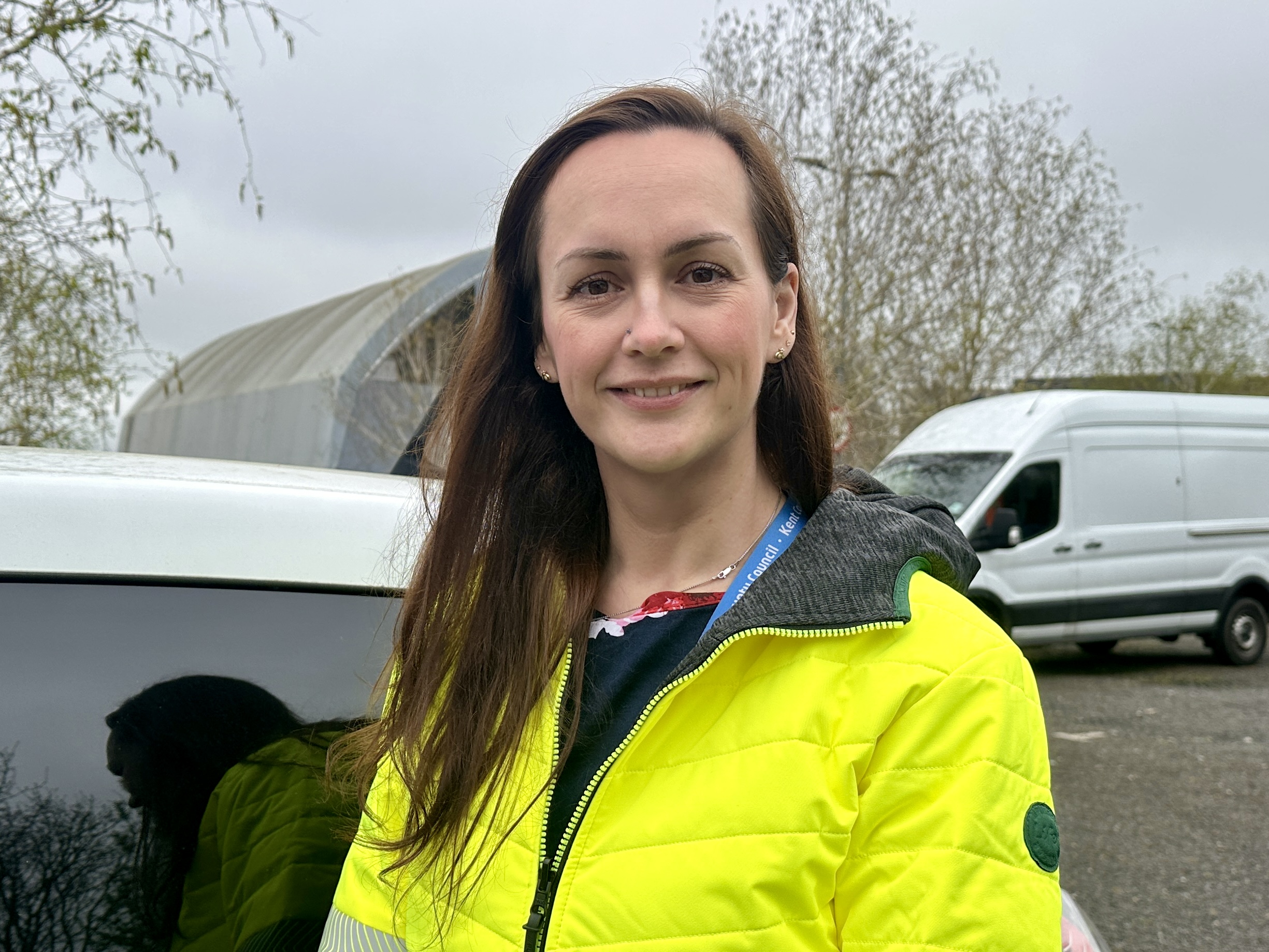
Helen Rowe, Interim Head of Highways (Assets) at Kent County Council and Chair ADEPT’s National Bridges Group, reflects on the launch of the DfT’s Structures Fund and what it means for local authorities managing increasingly complex and critical infrastructure.
When the Department for Transport (DfT) first announced the Structures Fund in summer 2025, it was clear that this marked a significant shift in how national government was beginning to recognise the challenges facing local authority structures. For many of us working in this space, the issues are not new. We have been managing ageing assets, constrained budgets and increasing demand for many years. What the announcement did was bring those challenges into sharper focus at a national level.
Engaging early
In the initial stages, the detail behind the fund was limited. The definition of what constituted a “dilapidated” structure was not clear and the practicalities of how local authorities would access and use the funding had not been fully developed. Through ADEPT and the National Bridges Group, we engaged early with colleagues at the Department for Transport to help shape a fund that would be both realistic and deliverable.
That process of engagement has been important. The fund has evolved meaningfully as a result of consultation and feedback from across the sector. While it would be unrealistic to expect that every concern has been addressed, the direction of travel has been hugely positive. The Structures Fund which was officially opened on the 15th April 2026, is now more closely aligned with the way local authorities actually manage their assets and the types of schemes we are able to bring forward.
Key improvements
One of the key areas of improvement has been in recognising the nature and scale of structures work. Bridge projects are rarely simple or isolated from other works. They are often complex, involve multiple constraints and sit within live networks that people rely on every day. The ability to bring forward packages of schemes, rather than focusing solely on large individual projects, reflects that reality and allows authorities to address issues more strategically across their networks.
There has also been a welcome acknowledgement of the skills challenge within the sector. Not all authorities have the in-house capability required to develop and deliver complex structures schemes. The introduction of a technical advisory resource is therefore a positive step. It provides an opportunity to support those authorities that may otherwise struggle to access the fund and helps ensure that no one is excluded due to a lack of internal expertise.
Challenges and timescales
However, there are still important challenges to consider. Timescales for delivery remain a significant concern. Strengthening, upgrading or replacing structures on existing networks is inherently complex. These schemes often require coordination with utilities, planning consents, environmental approvals and, in some cases, third party asset owners. They are also delivered in environments where disruption must be carefully managed. Setting ambitious deadlines for completion introduces risk, and could mean that projects of greatest need are excluded from the bidding process as a result.
Currently the final deadline for bids is August 3rd, 2026, with funding decisions expected to be announced in Autumn 2026, and all projects required to be completed by March 2030.
It is vitally important to be clear about the scale of the issue we are trying to address. The Structures Fund represents a valuable and necessary investment, but it will only begin to address the backlog of maintenance that exists across the country.
In many authorities, the scale of need is substantial. In Kent alone, the cost of maintaining existing structures and tunnels runs into very significant figures. In addition, we, like many local authorities, are managing damage to our network from third parties, such as the large scale cliff collapse at Galley Hill. This has severed a key link for the community and at an estimated £50m+ to rectify, is not something we can fund from our standard maintenance block allocation and will likely be our bid for the Structures Fund as a result.
However, this is not an existing structure and therefore will actually increase our maintenance burden rather than reduce it.
The need for a long-term commitment
Resolving the funding shortfall for structures and tunnels maintenance is not a short-term challenge that will be fixed by a one-off bid fund and to make meaningful change will require sustained, long-term commitment if we are to move from managing decline to building resilience.
Bridges and other highway assets are not isolated features. They are the critical nodes within a much larger system. If one of those nodes fails, the impact is immediate and often far reaching. Diversions can be lengthy, communities can be disrupted and access to essential services can be compromised. These are not assets that can be replaced quickly or easily and their importance should not be underestimated.
There is also a broader question about how we understand the condition of our assets as a nation. The decision not to continue the RAC Foundation bridge survey reflects concerns about data consistency and comparability, particularly where reporting approaches vary between authorities.
ADEPT’s National Bridges Group flagged this gap as an opportunity for DfT to incorporate some of the key questions into the Transparency Reports all local highway authorities are required to publish to unlock their incentive funding.
I am pleased to say that DfT worked collaboratively with ADEPT to include some of the key questions into the transparency reports, initially with a small data set, but with areas we can expand in future to improve the understanding of the wider network condition. Our hope is that the increased visibility of our condition data with decision makers will help strengthen the understanding of the challenge faced by local authority structures teams.
Understanding current funding
At the same time, we must consider how our networks are funded. Local highway networks carry the vast majority of journeys across both road and rail and support a wide range of essential services, from utilities and public transport through to everyday access to work, education and healthcare. The ADEPT National Bridges Group have been looking at some of the published data from DfT regarding spend and passenger km travelled. Local highway networks carry 66.1% of the travelling public but receive only 10% of annual funding allocated across road and rail for maintenance by DfT.
To put this into context approximately 381 passenger kilometres are travelled on the local highway network for every £1 invested in its maintenance. Compared to 7.3 passenger kilometres travelled on the rail network for every £1 invested in maintenance, or 50 passenger kilometres travelled on the trunk road network for every £1 invested in maintenance.[1]
This disparity is difficult to reconcile with the level of demand placed on these assets and is reflected in their condition, and community frustration in that condition.
Addressing this imbalance is not straightforward, but it is necessary. If we are to maintain and improve our infrastructure, funding must better reflect both usage and importance. Local networks are the foundation upon which so much of our daily lives depend and they require investment that recognises that role.
Planning for the future
The Structures Fund is therefore an important step forward. It reflects constructive engagement between government and the sector and demonstrates a willingness to listen and adapt. It provides an opportunity to begin addressing some of the most pressing issues facing our structures.
Looking ahead, my hope is that this is the beginning of a more sustained and strategic approach. One that recognises the complexity of the assets we manage, supports the development of skills and capability within the sector and takes a more holistic view of network performance.
Above all, we need to move away from viewing structures in isolation. They are integral to the functioning of the entire network, and their value extends far beyond their immediate location. If we can recognise that and plan accordingly, we can move towards a more resilient and effective system.
That is the opportunity in front of us. The challenge now is to ensure that we make the most of it.
Further information
- Read ADEPT’s response to the launch of the Structures Fund in April 2026
Author
Helen Rowe is Interim Head of Highways (Assets) at Kent County Council and Chair of ADEPT’s National Bridges Group.
[1] https://www.gov.uk/government/publications/dft-annual-report-and-accounts-2024-to-2025/department-for-transport-annual-report-and-accounts-2024-to-2025-html-version