
Live Labs 2 blog – Devon’s A382 carbon neutral highway project update
This month’s blog comes from Beth Lewis, Principal Engineer and project lead for the Devon Live Labs 2 initiative which is aiming to create the UK’s first carbon negative highway. Beth shares an update on all the latest from the project as it enters an exciting new stage.
It is now approaching six months since works began in earnest on the first phase of the A382 improvement scheme, and it has certainly been a challenging and eventful period.
Although a relatively short period in terms of a major highway improvement project, during this time we have already seen timber edging installed and the formation of the bund; created from surplus material reclaimed from the site.
This work has reduced heavy vehicle movements on the local roads and prevented 1,020 lorry loads going to landfill, due to save 560 tCO2e upon completion of the bund.
Currently, the focus of the project is the Jetty Marsh Link Road and the new roundabout junction at Whitehills Cross. As the name may suggest, this part of the scheme lies within a floodplain and delivering major construction works through one of the wettest winters on record has presented significant challenges. But, despite repeated saturation of the works area and restrictions on pumping during periods of wider flooding, the project has come through the 2025/2026 winter still on schedule.
The Devon Live Labs 2 team are very conscious that while progress on site has continued at an excellent pace, the last six months have not been easy for everyone involved. The road closure has affected daily journeys, routines and access for many people, and we recognise that this disruption has caused real inconvenience for local residents and businesses.
Why was a full road closure chosen?
One of the most difficult decisions we faced during the planning of this phase of the scheme was how best to manage traffic while the works were carried out. For projects of this nature, the usual approach is to keep the road open under traffic signals wherever possible, with full closures used only as a last resort.
However, previous experience of signal‑controlled roadworks in this area showed that this approach could lead to severe congestion, with traffic queues extending well beyond the immediate works. With drivers diverting through local roads in an attempt to avoid delays, this approach often caused wider disruption across Newton Abbot and the surrounding communities. So, from the outset of the scheme, the project team was tasked with avoiding a repeat of this situation.
This was particularly important given the scale of the engineering challenges involved, including major changes in ground levels within a constrained site and extensive utility works including the diversion of a large water main supplying two reservoirs.
Every traffic management option that was explored had drawbacks. Keeping the road open would reduce the visibility of disruption but carry a high risk of prolonged congestion and unpredictable journey times, potentially for several years. A full closure, while immediately more disruptive, offered the opportunity to complete the work more quickly and with greater certainty.
Assessing the options
To ensure that the decision was evidence‑based, the project team worked closely with traffic modelling and traffic management specialists to assess several scenarios which included:
- traffic signals
- a conventional road closure
- a digitally managed closure
The modelling considered not just the impact on those directly using the route, but also the knock‑on effects on the wider road network.
Although no option removed disruption altogether, the modelling showed that a digitally managed closure offered the best overall outcome.
Delivering results driven by data
The approach outlined above involves closing the road but providing two signed diversion routes, rather than the conventional single route, supported by electronic message signs. These give drivers live journey‑time information and allow them to make informed choices, ultimately helping to distribute traffic more evenly across the network.
While the decision to close the road was not taken lightly, the unavoidable fact is that it will dramatically shorten the overall duration of disruption.
Compared with traffic‑signal working, our strategy reduces the construction programme by approximately one year and avoids three years of stop‑start congestion and changing traffic layouts.
This is a considerable reduction in both the negative impact on local traffic and the project’s construction time, and has been estimated to save approximately 1,000tCO2e.
How this approach is helping
As the works have progressed, some additional benefits have since become clear. The consistent messaging, that the road is closed throughout this phase, avoids the confusion that can arise from frequently changing signal layouts or short‑term closures. This provides greater certainty for those planning their journeys as well as offering clarity to local residents and businesses.
Closing the road completely has also created a safer working environment for the teams undertaking the improvement works, removing the need for operatives to work alongside live traffic. This allows the majority of the work to be tackled during daytime hours and enables higher‑quality construction, for example by reducing the number of pavement joints, while also avoiding the costs and impacts associated with prolonged night working.
Importantly, having the full site available has provided flexibility during a very challenging winter. When flooding or utility works have restricted activity in one area, teams have been able to move to other parts of the site. Under more traditional traffic management, this would have been far more difficult and would almost certainly have led to delays.
Devon site visit February 2026
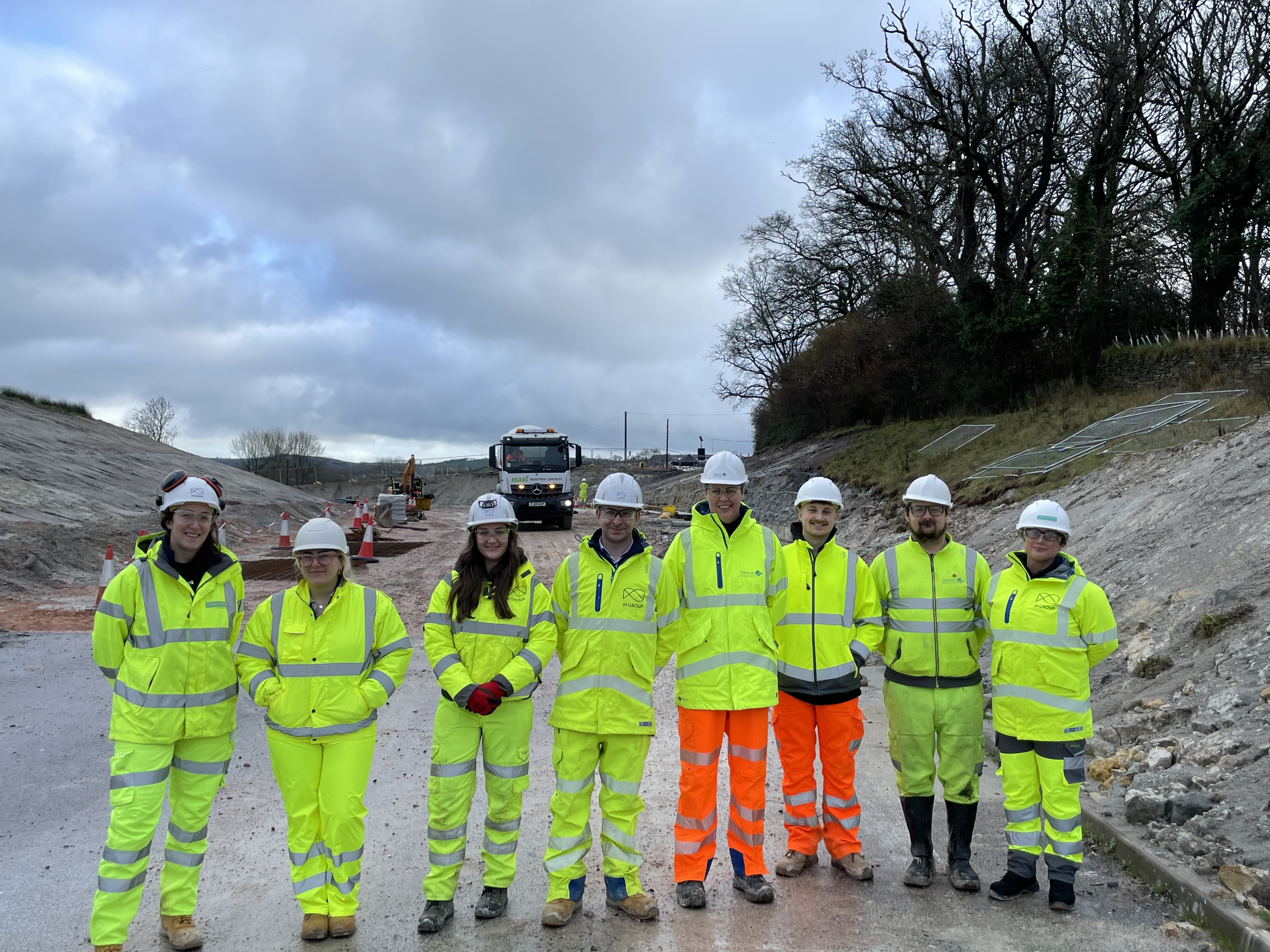
We were gifted an unusually bright and dry day on the 10th of February 2026, when Live Labs 2 project teams and members of the Commissioning Board made their way to Devon for a site visit.
This opportunity allowed us to share some of our recent developments and success stories live and in situ and enabled project members to showcase some of the scheme’s innovative design solutions.
This included the landscape bund around the area of the Stover Golf course which has helped to reduce the amount of waste from the site going to landfill. Visitors were also able to explore the tree nursery which is housing native species transplanted from the original site, which will be moved back when the scheme is completed.
Next steps
Although the Devon Live Labs 2 project experienced some unavoidable delays in getting underway, we are delighted with the progress made so far.
Moving forwards we are keen to continue communicating the clear benefits of the scheme to a wider audience and sharing the valuable learning from the project with our sector peers.
Further information
- For more information on ADEPT Live Labs 2: Decarbonising Local Roads in the UK, please look at the Live Labs 2 section on the website
- Explore updates on the Devon Live Labs 2 project here
- You can discover more about the Live Labs 2 Decarbonisation of Highways Pledge here and the launch event at Westminster here
Author
Beth Lewis is the Principal Engineer and Project Lead for the Devon County Council A382 Live Labs 2 project.